

This article examines recent developments in U.S. economic policies, inflation trends, and the implications of these factors on the Federal Reserve’s objectives. It integrates statements from U.S. Treasury Secretary Janet Yellen and Federal Reserve Vice Chair for Supervision Michael Barr, offering insights into the government’s response to inflationary pressures and the broader economic outlook. This analysis is pivotal for understanding the trajectory of the U.S. economy, the effectiveness of current policies, and the potential challenges in achieving long-term economic stability.
In recent discussions, notable figures such as U.S. Treasury Secretary Janet Yellen and Federal Reserve Vice Chair for Supervision Michael Barr have provided critical insights into the state of the U.S. economy, focusing on inflation dynamics, policy responses, and future economic expectations. Their observations come at a time when the U.S. is grappling with inflationary pressures while striving to maintain economic growth and stability.
Inflation Trends & Economic Strength
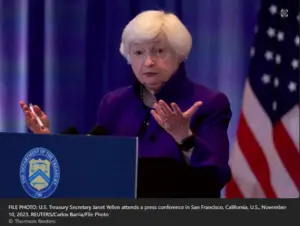
During a statement made on Wednesday, February 2024, U.S. Treasury Secretary Janet Yellen discussed recent consumer price inflation data, highlighting a slight exceedance of expectations but emphasized the significance of a long-term downtrend in inflation, aligning with the Federal Reserve’s 2% annual target. Despite a 0.3% rise in the Consumer Price Index (CPI) in January 2024, which surpassed the 0.2% forecast by economists, Yellen underscored the economy’s robustness, evidenced by rising wages and significant investments in infrastructure, healthcare, and clean energy. She noted substantial reductions in gasoline prices and other commodities, despite higher housing costs, as indicators of an adjusting economy.
Yellen’s remarks were part of a broader narrative promoting President Biden’s economic policies, with an emphasis on sustainable growth sectors. She also referenced historical economic theories, particularly those of John Maynard Keynes, to contextualize current policy approaches towards business cycles and public interventions.
Federal Reserve’s Perspective on Inflation and Policy Adjustments
Michael Barr provided a complementary but cautious perspective on the path to achieving 2% inflation. He acknowledged the unexpected rise in inflation in January as a testament to the ongoing challenges the Federal Reserve faces in stabilizing prices without adversely affecting employment or economic growth. Barr’s comments, made during a conference by the National Association for Business Economics, emphasized the unpredictability of the economic recovery process post-pandemic and the implications for interest rate policies.
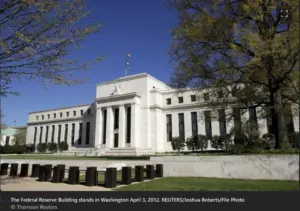
With a 3.1% year-on-year increase in consumer prices in January and core inflation at 3.9%, driven mainly by rising shelter costs, the Federal Reserve’s stance on interest rates remains guarded. The institution has opted for a steady rate, with potential adjustments contingent on further data demonstrating a sustained inflation decline. Barr highlighted the pandemic’s unique economic impacts and dismissed concerns over commercial real estate valuations in the banking sector, reinforcing confidence in the financial system’s resilience.
The discussions by U.S. Treasury Secretary Janet Yellen and Federal Reserve Vice Chair for Supervision Michael Barr highlight the strategic and cautious approach the U.S. is adopting to address economic challenges and inflationary pressures. Their commentary reveals a blend of cautious optimism and a commitment to data-driven policy-making aimed at achieving economic stability and growth. By emphasizing the need for careful interest rate adjustments, continuous economic monitoring, and support for sustainable growth sectors, they delineate a comprehensive strategy for managing the economic implications of global events and domestic policies. This approach underscores the U.S. government and Federal Reserve’s dedication to navigating the economy through complex scenarios toward achieving its long-term objectives of stability and growth.
About A.J. Arenburg Financial

A.J. Arenburg Financial, based in Jacksonville, Florida, specializes in investment banking and advisory services for the industrials, healthcare, and technology sectors. We serve boutique private equity firms, family offices, and organizations with annual revenues exceeding $10 million, focusing on exit strategies for family-owned businesses without succession plans.
We leverage our legal and tax network to provide comprehensive financial advisory services, supporting acquisition strategies and offering full-service assistance for mergers and acquisitions.
Our services integrate investment opportunities with corporate finance advisory, highlighting financial, commercial, operational, and technical due diligences alongside strategic transaction advisory.
Disclosure
The information provided by A.J. Arenburg Financial Equity Research Division is for educational purposes only and is not intended to serve as investment advice. The analysis, views, and opinions expressed represent our assessments as of the date of publication and are subject to change at any time without notice. This document is not a recommendation to buy, sell, or hold any specific securities.
Investors should consult with their financial advisors before making any investment decisions. A.J. Arenburg Financial Equity Research Division and its analysts are not registered investment advisors, and we do not provide personalized or individualized investment advice. Any investment decisions made by the reader based on information contained herein are the sole responsibility of the reader.
The contents of this report should not be construed as an express or implied promise, guarantee, or implication by A.J. Arenburg Financial Equity Research Division that clients will profit from the strategies herein or that losses in connection therewith can or will be limited. Past performance is not necessarily indicative of future results. Investments in securities are subject to market and other risks, and there is always the potential of losing money when you invest in securities.
Neither A.J. Arenburg Financial Equity Research Division nor any of its affiliates, directors, officers, or employees bear any responsibility for any investment decisions made based on information in this report. The reader must independently evaluate the economic risks and merits of any investment decision.
By using this document, the reader agrees to release and hold harmless A.J. Arenburg Financial Equity Research Division from any and all liability concerning the use of this document and/or the information contained therein.
Sources
Yellen calls market reaction to inflation data a ‘tremendous mistake’ (msn.com)
Fed’s Barr: ‘Bumpy’ path to 2% inflation means soft landing jury still out (msn.com)