

Navigating Commercial, Technical, and Financial Investigations in M&A Transactions
Due diligence is an important factor when considering a large investment, whether it be real estate or business buy or sell transactions. Due diligence comes in many different forms, each supposed to drill down on specific drivers within a business that drive sustainable growth and financial health looking into the future.
For the most part, in the lower and middle markets, which is our playground within the mergers and acquisitions (“M&A”), due diligence inquiries typically come in three forms: Commercial, Technical, and Financial due diligence. In this educational blog, we will stick to what we know and elaborate on these three diligence components that make up the broader term “Due Diligence.”
Let’s initially take a look at the three types of diligence services A.J. Arenburg Financial engages with clients and initially gives an overview of each term. It’s important to note that we will be using diligence terms with respect to M&A and other investment banking activities.
Commercial Due Diligence
This involves assessing the market environment in which the company operates. It includes analyzing the company’s market position, competition, product or service viability, and growth prospects. The goal is to understand the commercial viability and potential of the business being acquired.
Technical Due Diligence
Technical due diligence is focused on the technical aspects, especially in companies with significant technological or scientific components. This may involve evaluating the technical state of equipment, the sophistication of technology, intellectual property rights, and the technical skills of the workforce.
Financial Due Diligence
Financial due diligence involves a thorough review of the financial records of the target company. This includes analyzing historical financial performance, the robustness of its financial projections, the structure of its assets and liabilities, and any potential financial risks or liabilities. The focus is on verifying the financial health and sustainability of the business.
Each type of due diligence provides critical insights into different aspects of the target company, helping to inform the decision-making process in M&A transactions.
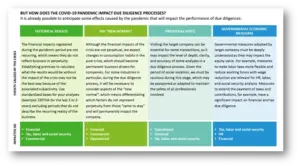
An article by Deloitte explains some of the nuances regarding diligence processes and the historical results, and a “New Normal” theory, amongst a few components, posted that due diligence analyses were impacted during the pandemic era due to social isolation. I don’t think that this is completely true; I agree that it had a psychological effect that drives other components of due diligence processes, but I think the article contains some good context in layman’s terms. In addition, the article provides an in-depth view of how their take on the impacts of COVID-19 affected due diligence processes.
Deloitte has identified several impacts on due diligence processes in the context of M&A, particularly influenced by the COVID-19 pandemic:
Historical Results
The pandemic’s financial impacts are not recurring and do not reflect the long-term business reality. It’s recommended to use standardized bases like EBITDA from the last 2 or 3 years, excluding non-representative periods, for analysis. This approach helps in understanding the genuine financial health of the business, avoiding skewed perceptions due to extraordinary pandemic impacts.
The “New Normal”
Post-crisis changes in consumer behavior are expected to become permanent business drivers. In due diligence, it is important to distinguish between transient pandemic effects and those changes that are permanent and will continually affect the company. This differentiation is crucial for accurately assessing the target company’s future prospects.
Presential Visits
On-site visits to the target company are essential for in-depth and precise analysis of some transactions. However, due to social distancing norms, these visits might need to be delayed or adapted to ensure safety. This change can affect the level of detail and accuracy in the due diligence process.
Governmental Economic Measures
Understanding governmental measures adopted by the target company is critical. These include labor law flexibility, wage reduction schemes, tax payment extensions, etc. Such measures can significantly impact various aspects of due diligence like financial, tax, labor, social security, and HR analysis. They can affect the equity value and need to be carefully evaluated for their long-term implications.
The Due diligence processes now require a more nuanced approach that accounts for the temporary impacts of the pandemic and the more enduring changes it has brought about in business operations and consumer behavior.
THE PANDEMIC’S INFLUENCE ON THE M&A LANDSCAPE

The trend of outsourcing due diligence processes to third-party providers is growing among organizations, broker-dealers, and investment firms, as detailed in the article “Outsourcing Enhanced Due Diligence: A Growing Trend.” This shift is driven by the need for more comprehensive and efficient due diligence in today’s intricate financial landscape. Additionally, the COVID-19 pandemic has drastically transformed the M&A landscape, particularly in due diligence. Traditional methods were disrupted, necessitating broader due diligence that encompasses financial, tax, commercial, operational, IT, and cybersecurity aspects. This has led deal teams to devise innovative strategies, especially in response to delays in obtaining results from local authorities and an increased focus on cybersecurity and risk assessment.
Increased Demand for Due Diligence Services: The rise in financial scams and the need for accurate business valuations during the pandemic have led to heightened demand for due diligence services, thus increasing their costs.
Inflation and Market Impact: The pandemic-induced inflationary trend and market volatility have significantly affected various sectors, particularly financial services, resulting in increased costs for specialized services like Quality of Earnings reports.
Margin Shrinkage and Supply Chain Disruptions: The pandemic has caused disruptions in supply chains, leading to higher operational costs for businesses and consequently increasing the costs of due diligence services.
ANALYSIS OF THE SPIKE IN FINANCIAL CRIMES DURING COVID-19
Financial crimes, both in the United States and globally, have historically escalated during times of crisis. The COVID-19 pandemic has been no exception to this trend. Recent reports from 2023 indicate a continued concern regarding financial crimes. Notably, Kroll’s 2023 Fraud and Financial Crimes Report highlights that 69% of respondents expect financial crime risks to remain potent. This suggests a significant awareness and concern among professionals about the continued risk of financial crimes.
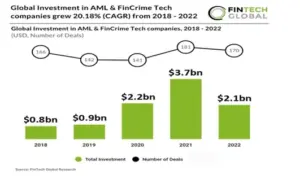
The graph below is taken from Fintech Global Research and depicts Global Investment in AML & FinCrime Tech companies and their growth. According to the article, these AML and FinCrime Tech companies grew 20.18% on a CAGR from 2018-2022.
Additionally, the report titled “The State of Financial Crime 2023” combines industry surveys and expertise to offer a roadmap for addressing these challenges in 2023, indicating an evolving landscape of financial crime.
Spike in Financial Crimes
The pandemic has seen a surge in financial crimes, with PwC’s 2022 report indicating losses of US$42 billion due to these crimes. This spike is attributed to the opportunities that arose from the economic downturn and crisis conditions, leading to a proliferation of fraud and economic crimes.
Evolution in Due Diligence Practices
In response to these heightened risks, due diligence processes have adapted significantly. There’s been a growing emphasis on nonfinancial factors in M&A, requiring expanded due diligence to limit risk and maximize value. This shift highlights an increased need for thoroughness and expertise in navigating the new complexities brought about by the pandemic.
Impact on M&A Transactions
M&A transactions faced unique challenges during the pandemic, such as delayed local authority search results and a need for more comprehensive risk assessments, including IT and cybersecurity.
In summary, the COVID-19 pandemic has not only intensified the frequency and severity of financial crimes but also necessitated a more nuanced and comprehensive approach to due diligence in M&A transactions. This situation underscores the ongoing need for vigilance and advanced strategies to mitigate financial crimes and navigate the evolving landscape of business transactions.
DUE DILIGENCE PRICING ~ FACTORS AFFECTING THE MUCH-DEBATED PRICE TAG
The process of due diligence in mergers and acquisitions can be expensive, but it’s worth it if done correctly. However, there is a limit to how much it should cost. In recent years, the demand for due diligence has increased, especially among small business owners who may lack guidance and be driven by fear when trying to acquire a company. This may lead to inflated costs. According to a report by BigCommerce, the COVID-19 pandemic has caused a significant increase in eCommerce and digital payment methods, with a 22.2% year-over-year increase in global users of proximity mobile payments in 2020.
The cost of a quality diligence report can vary due to several factors. For example, when submitting a proposal to a potential client or bidding on a diligence project, the size of the revenue, business model, and transaction volume are crucial considerations. If a company generates $25 million in annual revenue from small, single transactions like building materials or nuts and bolts, the cost of financial due diligence will be higher than that of a company with the same annual revenue from selling high-end luxury vehicles. This is because financial due diligence or a Quality of Earnings (QofE) report is based on non-recurring revenue and recurring revenue analysis. The number of transactions and complexity of the accounting and financial reporting are also easier and less time-consuming to navigate for a business that generates its revenues and expenses through job costing rather than process costing type operation that flows through to the transaction volume derived within the General Ledger. Additionally, revenue generation, where there could be wholesaling and retailing transactions depending on the type of business model and industry, can further add to the complexity and time taken for diligence analysis.
A financial diligence report is a crucial tool that helps clients determine the true value of a business. The report rebuilds the normalized EBITDA or Adjusted EBITDA to the seller’s reported figures to uncover any discrepancies. This process highlights the cost arbitrage for different business models, which is essential information for clients. Typically, a reasonable price range for an entity falls between $30,000-$50,000, and it takes 4-6 weeks or longer to complete the report, depending on the efficiency of data flows.
Moreover, for entities greater than $25 million, the cost of a fair price report can range from $30,000 to millions, depending on many factors and the depth of the report needed. Integrating this with the provided research and due diligence, even before negotiations begin, may uncover hidden liabilities or assets affecting the purchase price. It’s a process of verification, investigation, or audit of a potential deal or investment opportunity to confirm all relevant facts and financial information. This is especially important in small business acquisitions, where search costs can include sourcing, legal fees, due diligence, and post-close expenses. The due diligence in M&A allows the buyer to confirm pertinent information about the seller, such as contracts, finances, and customers. Uncovered issues during due diligence might impact the purchase price or the representations and warranties the buyer might demand. Typically, due diligence focuses on EBITDA, the aging of receivables and payables, and cash flow analysis.
THE TAKEAWAY
In conclusion, the COVID-19 pandemic has brought about significant changes in the mergers and acquisitions (M&A) landscape. While initially slowing down M&A activity, the pandemic has necessitated adaptations in transaction execution, especially in a remote environment.
Due diligence processes have evolved, reflecting increased risk aversion in payment methods and a greater focus on assessing long-term impacts on companies. This evolution includes preparing for increased due diligence related to the pandemic’s impact, which is essential for successful M&A transactions in the current global context. These changes underscore the need for agility and comprehensive risk assessment in M&A strategies, ensuring that companies can navigate and adapt to the ongoing challenges presented by the COVID-19 pandemic.
ABOUT A.J. ARENBURG FINANCIAL

A.J. Arenburg Financial, headquartered in Jacksonville, Florida, specializes in investment banking and advisory services, focusing on the industrials, manufacturing, and AI-enhanced sectors. Our firm caters to a distinguished clientele, including premier boutique private equity firms, family offices, and entities with substantial annual revenues exceeding $10 million. We are adept at guiding family-owned and multi-generational businesses through sophisticated exit strategies, offering indispensable support for retiring owner-operators lacking succession plans.
Our comprehensive range of services merges exceptional investment opportunities with precise corporate finance expertise. We emphasize operational due diligence and strategic transaction advisory. Our Quality of Earnings Reports (QofE), a vital element of our financial due diligence process, provide essential insights for informed investment decisions. Our team, skilled in managing complex financial scenarios, devises strategic solutions that facilitate significant business transitions. With an extensive network in the private capital markets, A.J. Arenburg Financial commits to delivering efficient and reliable service, reinforcing our status as a trusted advisor for families and institutions on a global scale.
🌐 SOURCES
MERRIAM-WEBSTER.COM – TECHNICAL DEFINITION & MEANING
CORPORATEFINANCEINSTITUTE.COM – OVERVIEW OF DUE DILIGENCE IN AN M&A TRANSACTION
DELOITTE.COM – COVID-19: IMPACTS ON DUE DILIGENCE
FINALIS – OUTSOURCING ENHANCED DUE DILIGENCE: A GROWING TREND
FINANCIER WORLDWIDE – ADAPTING TO THE ‘NEW NORMAL’: BEST PRACTICES IN M&A DUE DILIGENCE
GRANT THORNTON – M&A IN A POST-COVID WORLD
EY – HOW THE COVID-19 PANDEMIC AFFECTS M&A TRANSACTION EXECUTION
MARSH MCLENNAN – COVID-19: WHAT ARE THE IMPACTS ON M&A ACTIVITY
DELOITTE – COVID-19: IMPACTS ON DUE DILIGENCE
PWC.COM – PWC’S GLOBAL ECONOMIC CRIME AND FRAUD SURVEY 2022
PWC.COM – GLOBAL M&A INDUSTRY TRENDS: 2023 MID-YEAR UPDATE
DELOITTE.COM – COVID-19: IMPACTS ON DUE DILIGENCE
GENEQUITYCO.COM – DUE DILIGENCE AND THE IMPACT OF COVID-19
CLOUDFICIENT.COM – THE IMPORTANCE OF DUE DILIGENCE IN MERGERS AND ACQUISITIONS
CORPORATEFINANCEINSTITUTE.COM – OVERVIEW OF DUE DILIGENCE IN AN M&A TRANSACTION
PRIVATEMARKETLABS.COM – SMALL BUSINESS ACQUISITION: BREAKING DOWN POTENTIAL …
BBGBROKER.COM – DUE DILIGENCE IN MERGERS AND ACQUISITIONS
WYRICK.COM – DUE DILIGENCE IN M&A TRANSACTIONS: WHAT IT MEANS AND …
INVESTOPEDIA.COM – DUE DILIGENCE