
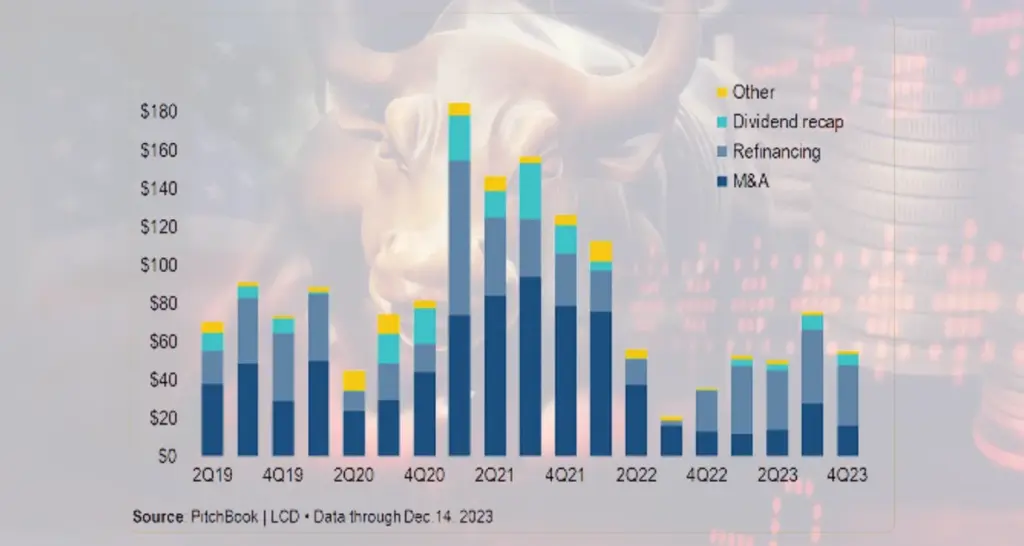
Risk & Opportunity In Leveraged Buyouts (LBO’s)
Leveraged Buyouts (LBOs) are integral to corporate finance, particularly in private equity transactions where risk and return are closely evaluated. At the core of this analysis, credit metrics & LBO’s determine pricing and structure based on risk. These models provide insight into how leverage impacts key financial metrics such as EBITDA, while allowing for adjustments as market conditions change.
Key credit metrics, including debt/EBITDA, interest coverage ratio, and debt service coverage ratio, play a critical role in assessing the financial health and overall risk profile of leveraged transactions.
In our exploration of these metrics, we emphasize their critical role in mitigating risks associated with LBOs. A robust understanding of these metrics safeguards investors from potential pitfalls, ensuring they don’t overpay for acquisitions or burden deals with excessive leverage. Maintaining a balanced approach to leverage is essential, with excessive leverage beyond 4x on EBITDA posing significant risks. Well-structured debt within an acquisition deal should enhance free cash flow, empowering companies to pursue growth opportunities without constraints on working capital.
Overview of LBO’s
Leveraged Buyouts (LBOs) offer a unique approach to acquisitions. In essence, an LBO involves the acquisition of a company, typically by a private equity firm, using a significant amount of borrowed funds or leverage. This leverage often involves a combination of debt and equity, with the acquired company’s assets serving as collateral.
At its core, a Leveraged Buyout (LBO) involves acquiring a company primarily through debt financing, typically facilitated by a term loan and additional subordinated or mezzanine bridge debt. The aim is to use the acquired company’s cash flow and assets to repay the debt gradually. In our realm of M&A, LBO transactions often represent private placements, where private companies seek a full sale. Investors leverage these deals, allowing them to allocate the leverage provided by lenders, typically around 2x, into the transaction. Consequently, the capital they would have invested in acquiring the entity can now be redirected towards acquiring additional portfolios or complementary entities. While this structure amplifies potential returns, it also escalates the inherent risks associated with the investment, commonly utilized in the Corporate World.
Leveraged Buyouts (LBOs) serve as versatile tools across various corporate scenarios –>
- Management buyouts (MBOs) involve the acquisition of a company by its existing management team.
- Corporate divestitures occur when a parent company sells a subsidiary or division to a private equity firm.
- Going-private transactions entail the acquisition of a publicly traded company by a private equity firm, transitioning it to private ownership.
The primary objectives of LBO transactions are –>
- Unlocking Value ~ LBOs aim to enhance the value of target companies through operational improvements, strategic initiatives, and streamlined operations.
- Capitalizing On Opportunities ~ Investors leverage LBOs to acquire undervalued or underperforming companies, utilizing their expertise to unlock their full potential.
- Generating Attractive Returns ~ LBO investors seek to maximize returns by leveraging borrowed funds to magnify the impact of operational improvements and value-creation initiatives.
In the subsequent sections, we will explore key concepts, methodologies, and best practices essential for understanding LBO transactions in corporate finance.
The Role of Credit Metrics In LBO Transactions
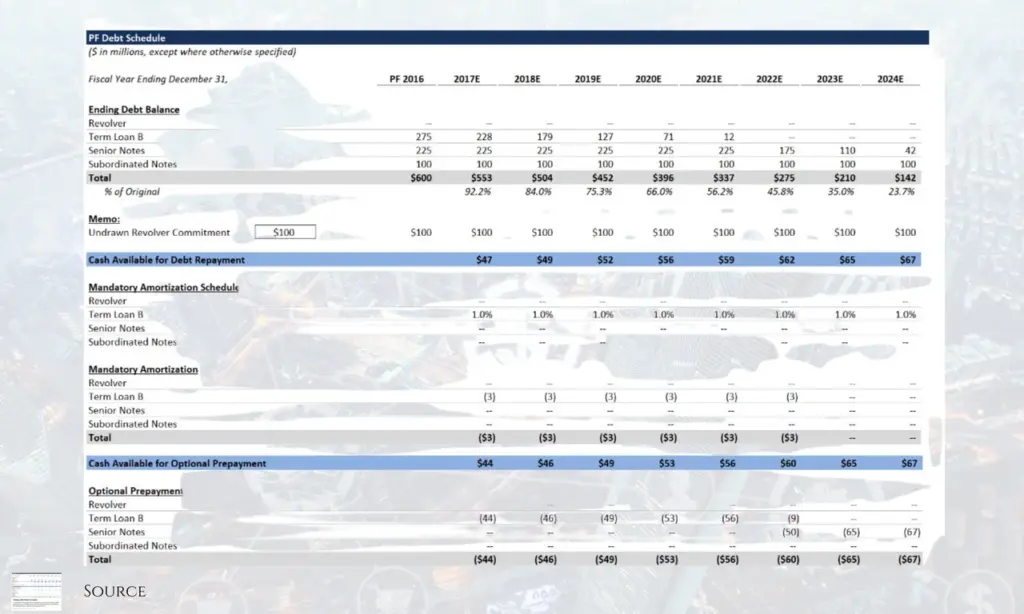
Credit metrics are essential in the assessment of a company’s financial health and risk profile within Leveraged Buyout (LBO) transactions. These metrics, including debt/EBITDA, interest coverage ratio, and debt service coverage ratio, provide crucial insights into the company’s ability to fulfill its debt obligations. They serve as key indicators for investors and lenders, guiding decisions on the appropriate level of leverage in an LBO transaction. By analyzing these metrics, stakeholders can accurately evaluate the company’s capacity to generate cash flow and manage debt effectively, ensuring a balanced risk-return profile in LBO investments.
Debt to EBITDA Ratio
This ratio measures the company’s leverage by comparing its total debt to its earnings before interest, taxes, depreciation, and amortization (EBITDA). It indicates how many years it would take for the company to repay its debt using its EBITDA.
- Formula ~ Debt / EBITDA
- Example ~ If a company has a total debt of $10 million and an EBITDA of $2 million, the debt-to-EBITDA ratio would be 5 ($10 million / $2 million).
Interest Coverage Ratio
This ratio assesses the company’s ability to cover its interest expenses with its operating earnings. A higher ratio indicates better financial health and a lower risk of default.
- Formula ~ EBITDA / Interest Expense
- Example ~ If a company has an EBITDA of $5 million and an interest expense of $1 million, the interest coverage ratio would be 5 ($5 million / $1 million).
Debt Service Coverage Ratio
This ratio measures the company’s ability to cover its debt service obligations, including principal and interest payments, from its operating cash flow after deducting capital expenditures (Capex).
- Formula ~ (EBITDA – Capex) / Total Debt Service
- Example ~ If a company has EBITDA of $4 million, Capex of $1 million, and total debt service of $2 million, the debt service coverage ratio would be 1.5 (($4 million – $1 million) / $2 million).
Cash Flow Adequacy
This ratio evaluates the company’s ability to generate sufficient operating cash flow to cover its total debt service obligations.
- Formula ~ Operating Cash Flow / Total Debt Service
- Example ~ If a company has an operating cash flow of $3 million and a total debt service of $2.5 million, the cash flow adequacy ratio would be 1.2 ($3 million / $2.5 million).
Debt Maturity Schedule
This schedule outlines the repayment schedule for the company’s debt, including principal and interest payments, over a specified period. It helps assess the company’s liquidity and refinancing risk. This ratio measures the value of collateral available to secure the company’s debt obligations relative to the total debt outstanding. It indicates the level of protection for lenders in the event of default.
- Formula ~ Value of Collateral / Total Debt
- Example ~ If a company has collateral valued at $20 million and a total debt of $15 million, the collateral coverage ratio would be 1.33 ($20 million / $15 million).
These formulas and metrics provide valuable insights into a company’s financial health and risk profile during an LBO transaction, helping investors and lenders make informed decisions.
Interpreting Credit Metrics In LBO Analysis
Interpreting credit metrics within the context of Leveraged Buyout LBO transactions requires a clear understanding of how each metric reflects the financial health and risk profile of the target company. For example, the Debt to EBITDA ratio serves as a primary indicator of leverage. A higher ratio signals elevated debt relative to earnings, increasing the risk of financial strain and potential default, while a lower ratio suggests a stronger ability to support debt obligations. Similarly, the Interest Coverage Ratio measures the company’s ability to meet interest payments from operating earnings. A ratio below 1 indicates insufficient coverage, pointing to heightened default risk.
Different levels of each credit metric provide additional insight into overall stability. A Debt Service Coverage Ratio below 1 indicates that operating cash flow cannot fully support debt service obligations, signaling distress. A ratio above 1 reflects sufficient cash flow, though excessively high levels may indicate underutilized leverage and missed growth opportunities. Investors should evaluate these metrics collectively to identify red flags such as weakening performance, declining cash flow, or unsustainable leverage levels. A disciplined review of credit metrics allows investors to make informed decisions and better manage risk in LBO transactions.
For additional context on how lenders and investors evaluate these metrics, see Corporate Finance Institute credit analysis resources.
Factors Influencing Credit Metrics & LBO Transactions
External and internal factors significantly influence credit metrics in Leveraged Buyout (LBO) transactions. External factors like industry and market conditions, business cyclicality, and revenue growth prospects shape financial performance and risk profiles. Internally, operational efficiency, cost management, and capital expenditure requirements directly impact cash flow generation and debt repayment capacity. Understanding these factors is crucial for assessing risk and making informed investment decisions in LBO transactions.
LBO Success Through Understanding Credit Metrics
Understanding key credit metrics is essential for success in Leveraged Buyout (LBO) transactions. These metrics offer valuable insights into target companies’ financial health and risk profile, guiding investors in assessing creditworthiness and mitigating risks associated with leverage. By conducting thorough analysis and due diligence, investors can make informed decisions, ensuring the viability and sustainability of LBO investments.
Utilizing the insights gained from this guide empowers investors to navigate the complexities of LBO transactions with confidence. By prioritizing a comprehensive understanding of credit metrics and their implications, investors can maximize returns while minimizing risks, fostering success in the dynamic realm of leveraged buyouts.
About A.J. Arenburg Financial
A.J. Arenburg Financial is a boutique investment banking and advisory firm focused on lower middle market businesses. We work directly with owners to prepare, position, and execute transactions in a way that holds up under real buyer and lender scrutiny.
Our clients are typically generating $10M to $250M in revenue and $2M to $25M in EBITDA across several sectors of focus, including industrials, construction, business services, and select healthcare and technology sectors. Many are founder-led or family-owned businesses navigating growth, liquidity, or succession decisions.
We advise on sell-side M&A, business valuations, financial due diligence, and capital strategy. This includes Quality of Earnings analysis, normalization of EBITDA, working capital assessment, and building financials that align with how buyers and lenders actually evaluate risk.
Beyond transactions, we support owners ahead of a sale through exit planning and fractional CFO work. That means cleaning up financials, identifying gaps, and positioning the business properly before going to market.
Our approach is hands-on and execution focused. We are not a volume shop. Every engagement is built around presenting a credible, defensible story to buyers and driving a process that gets done.
Disclosure
The information provided by A.J. Arenburg Financial is for educational purposes only and does not constitute investment advice. Our analysis, views, and opinions are based on assessments made at publication and are subject to change without notice. We do not recommend buying, selling, or holding any specific securities.
Investors should seek advice from their financial advisors before making any investment decisions. A.J. Arenburg Financial and its analysts are not registered investment advisors and do not offer personalized investment advice. Any investment decisions made based on this information are solely the responsibility of the reader.
This report does not guarantee profit or limit losses, and past performance is not indicative of future results. Investing in securities carries inherent risks, and readers should carefully evaluate the risks and benefits of any investment decision.
A.J. Arenburg Financial and its affiliates, directors, officers, or employees are not responsible for investment decisions made based on this report. Using this document, the reader agrees to release A.J. Arenburg Financial from any liability associated with its use.