
EBITDA 2026: Business Valuation Guidance for Owners
Business owners preparing for a sale, recapitalization, or valuation update in 2026 need more than a generic multiple. Buyers look at adjusted EBITDA, revenue quality, customer concentration, margin stability, working capital needs, management depth, and transferability before deciding what a business is worth. A.J. Arenburg Financial helps lower middle market business owners understand how EBITDA is viewed in real M&A processes and what can be done before going to market.
Why EBITDA 2026 Matters
EBITDA remains one of the most common starting points for valuing privately held companies. But in 2026, the number itself is only part of the story.
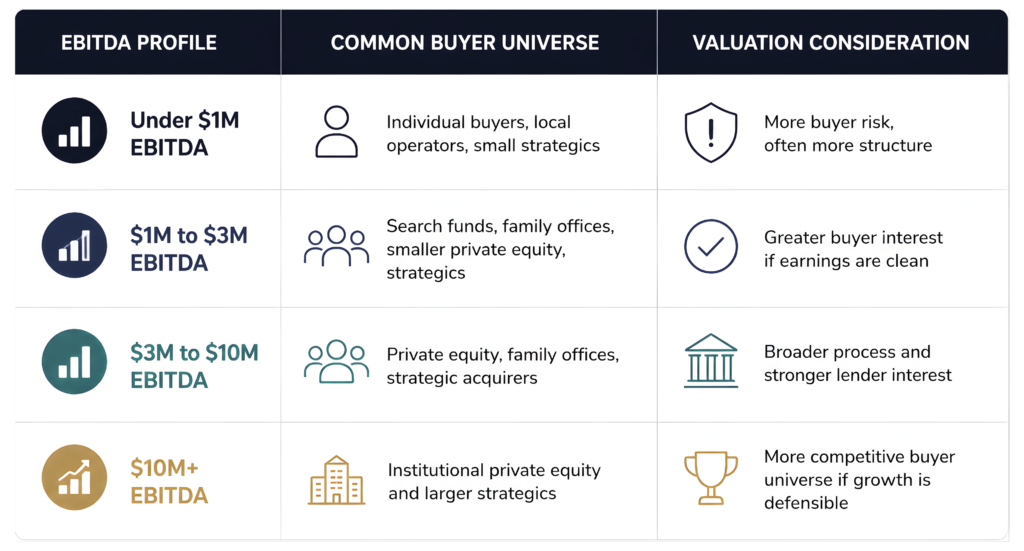
A company with $2 million of EBITDA may receive very different buyer interest than another company with the same earnings. The difference usually comes down to risk, growth, financial clarity, and how transferable the business is after closing.
For business owners, EBITDA 2026 valuation planning should answer three questions:
- What is the company’s real adjusted EBITDA?
- What multiple range would buyers likely apply?
- What can be improved before a sale process begins?
How Buyers Evaluate EBITDA in 2026
Buyers do not usually rely on reported net income alone. They review earnings quality and make adjustments to understand the normalized cash flow of the business.
- Common EBITDA adjustments may include:
- Owner compensation above or below market
- One-time legal, consulting, or professional fees
- Non-recurring revenue or expenses
- Personal expenses running through the business
- Unusual repairs, insurance claims, or settlements
- Changes in accounting policies
- Revenue or margin items that may not continue after closing
FAQ
What does EBITDA mean in business valuation?
EBITDA stands for earnings before interest, taxes, depreciation, and amortization. In M&A, it is often used as a starting point to estimate the cash flow a buyer may use to value a business.
Why is adjusted EBITDA important in 2026?
Adjusted EBITDA helps buyers understand the normalized earnings of a business. In 2026, buyers are likely to keep focusing on earnings quality, add-back support, margin trends, and whether the company’s cash flow can hold up after closing.
How do buyers use EBITDA to value a business?
Buyers generally apply a valuation multiple to adjusted EBITDA. The multiple depends on company size, growth, industry, customer concentration, management depth, financial quality, and overall risk.
What EBITDA multiple is my business worth?
There is no single answer. Two companies with the same EBITDA can receive different valuations based on risk, growth, transferability, and buyer demand. A valuation review can help estimate a supportable range.
Can I increase my EBITDA multiple before selling?
Yes. Owners can often improve buyer perception by cleaning up financials, reducing customer concentration, documenting add-backs, building management depth, improving reporting, and showing consistent revenue and margin trends.
Should I get a business valuation before selling in 2026?
Yes. A valuation can help you understand likely buyer expectations before going to market. It can also identify issues that should be addressed before outreach begins.
How far in advance should I prepare for a sale?
Ideally, owners should begin 6 to 24 months before a sale. This gives time to clean up financials, improve reporting, prepare diligence materials, and position the business more effectively.
Does A.J. Arenburg Financial provide EBITDA-based valuations?
Yes. A.J. Arenburg Financial provides business valuation, exit planning, transaction advisory, and financial diligence support for privately held and lower middle market businesses.