

Targeting Alpha in Investment
In the realm of finance, investors consistently strive to achieve a return on equity (ROE) that exceeds the cost of capital. This pursuit of ‘alpha’, which denotes returns that supersede average market benchmarks, attests to the strategy of generating value beyond the usual market levels. As we approach the culmination of 2023, the cost of capital continues to be a crucial aspect of strategic corporate planning, with its impact extending across global markets and various industries. Although the global economy has been moving towards stabilization, the trends in interest rates, which significantly influence the cost of capital, have continued to evolve.
What is the Cost of Capital?
The evaluation of investment opportunities and the formulation of corporate strategies rely heavily on the cost of capital, which serves as a benchmark and a critical influence on decision-making. By discerning the cost of equity and cost of debt, companies can determine the most efficient financing mix to optimize shareholder value. In the context of mergers and acquisitions, a thorough analysis of the cost of capital is essential to accurately assess target companies, negotiate deals, and make strategic decisions that align with long-term business objectives. This metric assumes a vital role in shaping the financial and strategic direction of a company, underscoring its significance in the broader scope of corporate finance.
Interest Rate Trends and M&A Activities
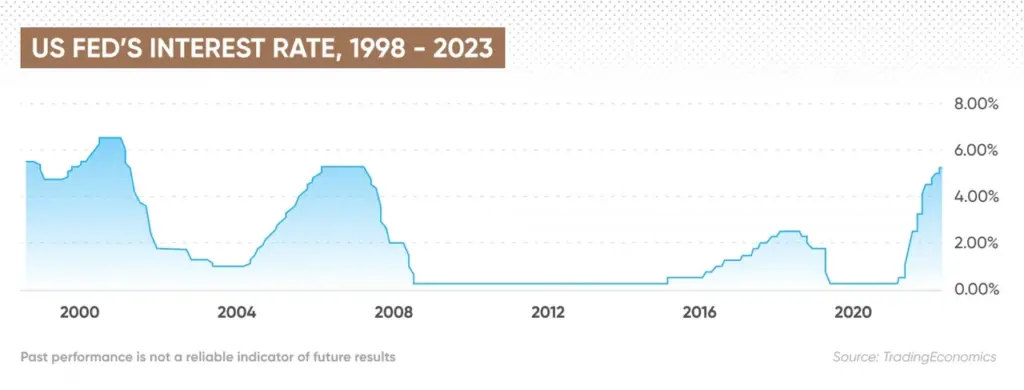
In 2023, interest rate trends have shown a mix of increases and stabilizations, depending on the region. Central banks in major economies, such as the Federal Reserve in the United States, the European Central Bank, and the Bank of Japan, have adopted differing monetary policies in response to their unique economic challenges and recovery paths post-pandemic. These policies directly influence the cost of borrowing and investing, thus affecting mergers and acquisitions (M&A). Higher interest rates typically lead to a higher cost of capital, which can make financing M&A activities more expensive and potentially slow down deal flow. Conversely, stable or lowering rates can encourage more vibrant M&A activity by reducing financing costs.
Global Economic Policies and Market Maturity
The impact of the cost of capital on M&A varies significantly around the globe, influenced by local economic policies and market maturity. In developed markets with mature financial systems, such as the United States and Western Europe, companies might have better access to diverse financing options, allowing them more flexibility despite fluctuating interest rates. In contrast, emerging markets, such as those in Southeast Asia and Latin America, which might be more susceptible to economic volatility and have less mature financial infrastructures, could experience different M&A trends. For instance, these markets might see increased foreign investment in certain sectors due to perceived growth opportunities, even in a high-interest-rate environment.
The Concept of WACC
In the context of M&A, the Weighted Average Cost of Capital (WACC) is particularly significant. WACC represents the average rate that a company is expected to pay to finance its assets, weighted by the proportion of debt and equity in its capital structure. It’s a crucial measure in evaluating investment opportunities, as it provides the hurdle rate that these investments must surpass to be considered beneficial.
The WACC is calculated using the following formula::
WACC=((E/V)×Re)+((D/V)×Rd×(1−Tc))
Where::
- E = Market value of the firm’s equity
- D = Market value of the firm’s debt
- V = Total value of capital (equity + debt)
- Re = Cost of equity
- Rd = Cost of debt
- Tc = Corporate tax rate
Bond Market and Equity Market Dynamics
This year’s bond market trends, characterized by rising yields and falling prices, have significantly influenced investor behavior. This shift towards equities reflects a strategic response to changing market conditions.
As bond yields rise, the attractiveness of equities often increases, particularly for investors seeking higher returns. This transition affects the cost of equity, a key component of a company’s overall cost of capital. Consequently, the changing dynamics in the bond market don’t just alter investment portfolios; they also impact corporate finance decisions, from capital structure optimization to strategic planning for growth and expansion. These trends underscore the interconnected nature of different market segments and their collective influence on a company’s financial strategy.
M&A activities in 2023 have been influenced by the evolving cost of capital. The economic environment, shaped by interest rate changes and new financial instruments, has affected the appeal and feasibility of acquisitions and mergers.
Industry Responses to Changing Market Conditions in 2023
In 2023, various sectors have exhibited distinct reactions to the dynamic economic environment, particularly in the context of rising interest rates. Industries like utilities and real estate, traditionally reliant on debt financing, have been noticeably impacted.
Utilities Sector ~ The utilities sector, known for its high capital expenditure and reliance on debt financing, has faced challenges due to the increased cost of borrowing. As interest rates rise, utility companies often see an escalation in their financing costs. This change can impact their profit margins and, in some cases, lead to adjustments in consumer pricing. However, the essential nature of utility services often provides a buffer against severe market fluctuations.
Real Estate Sector ~ The real estate industry, similarly dependent on debt for development and acquisition activities, has felt the pressure of higher interest rates. This increase can lead to a slowdown in real estate development projects and affect property values. Additionally, the cost of mortgages rises, potentially cooling down housing markets and affecting demand. However, the long-term nature of real estate investments and the sector’s adaptability to market changes can mitigate some of these effects.
Both sectors demonstrate how industry characteristics can influence responses to economic shifts, such as changes in interest rates. These variations underscore the importance of sector-specific analysis in investment and corporate strategy.
The impact of the cost of capital on M&A varies significantly around the globe, influenced by local economic policies and market maturity. In developed markets with mature financial systems, companies might have better access to diverse financing options, allowing them more flexibility despite fluctuating interest rates. In contrast, emerging markets, which might be more susceptible to economic volatility and have less mature financial infrastructures, could experience different M&A trends. For instance, these markets might see increased foreign investment in certain sectors due to perceived growth opportunities, even in a high-interest-rate environment.
About A.J. Arenburg Financial
A.J. Arenburg Financial is a boutique investment banking and advisory firm focused on lower middle market businesses. We work directly with owners to prepare, position, and execute transactions in a way that holds up under real buyer and lender scrutiny.
Our clients are typically generating $10M to $250M in revenue and $2M to $25M in EBITDA across industrials, construction, business services, and select healthcare and technology sectors. Many are founder-led or family-owned businesses navigating growth, liquidity, or succession decisions.
We advise on sell-side M&A, business valuations, financial due diligence, and capital strategy. This includes Quality of Earnings analysis, normalization of EBITDA, working capital assessment, and building financials that align with how buyers and lenders actually evaluate risk.
Beyond transactions, we support owners ahead of a sale through exit planning and fractional CFO work. That means cleaning up financials, identifying gaps, and positioning the business properly before going to market.
Our approach is hands-on and execution focused. We are not a volume shop. Every engagement is built around presenting a credible, defensible story to buyers and driving a process that gets done.